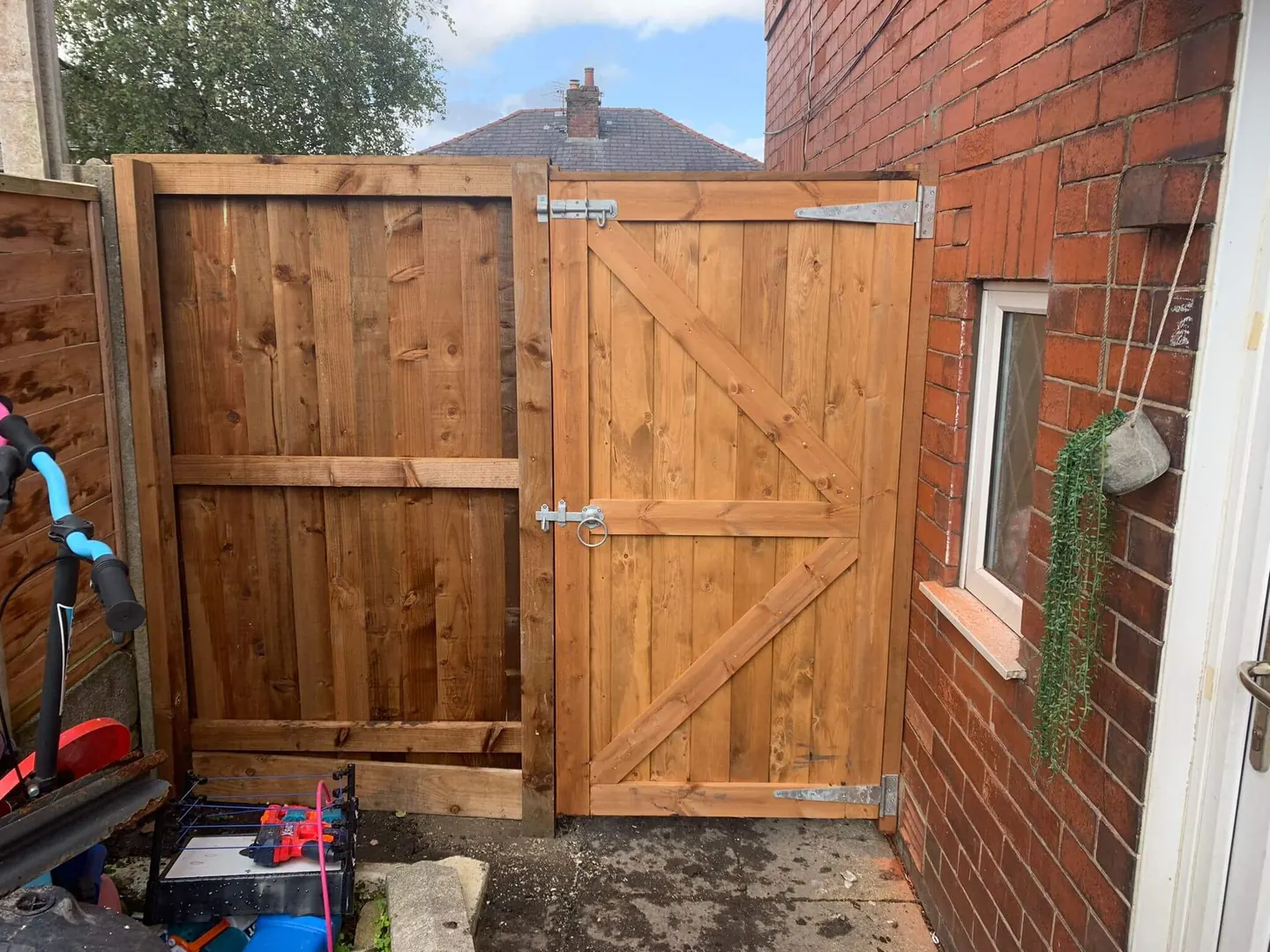
A garden gate gets used far more than most sections of fencing, so correct support and hardware matter. We fit wooden pedestrian and side gates across Wigan, sized to the opening and hung for smooth, secure everyday use.
Local Wigan fencing teamClear written quotationsRepairs and installationPanels posts and gates
Included
What this service can cover
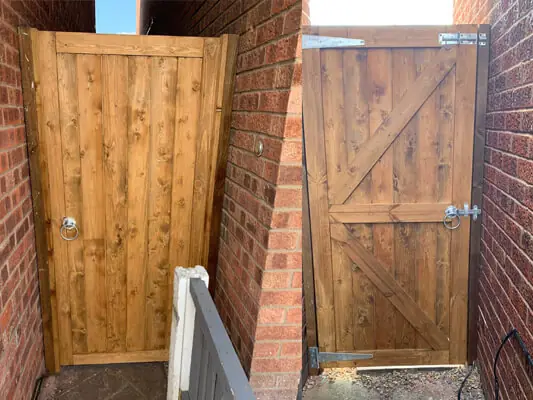
Made-to-measure timber pedestrian gates
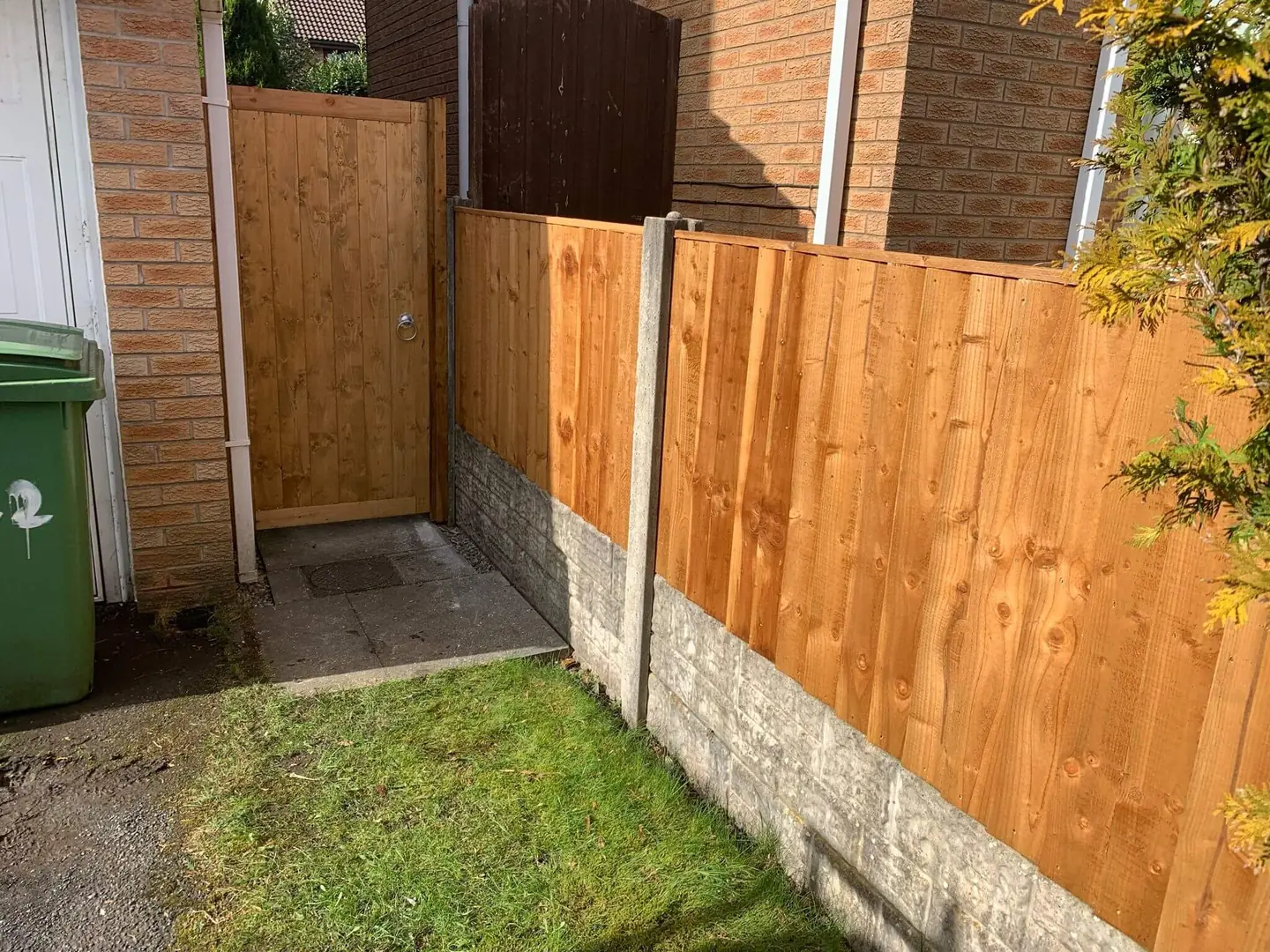
Side passage and rear access gates
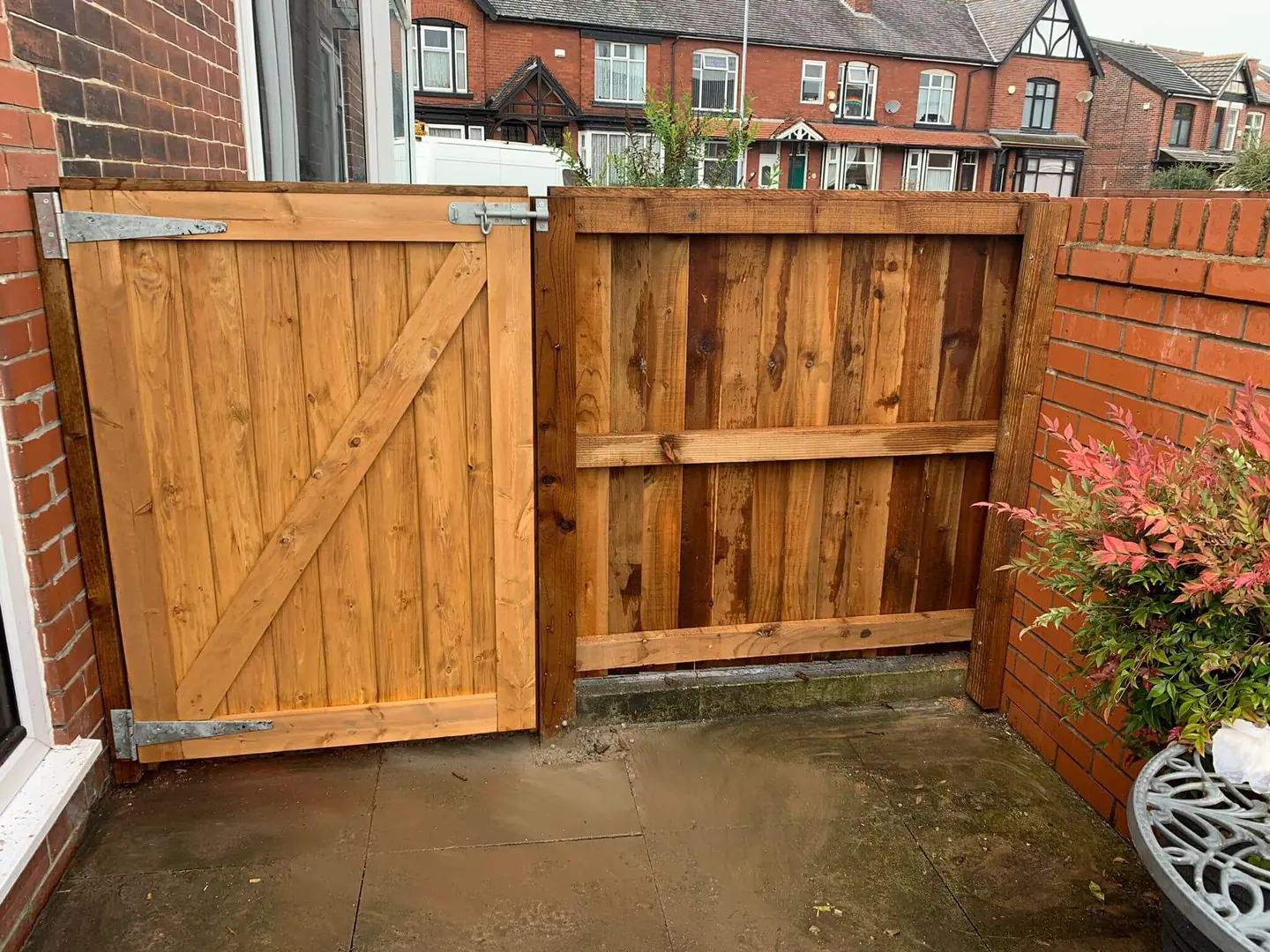
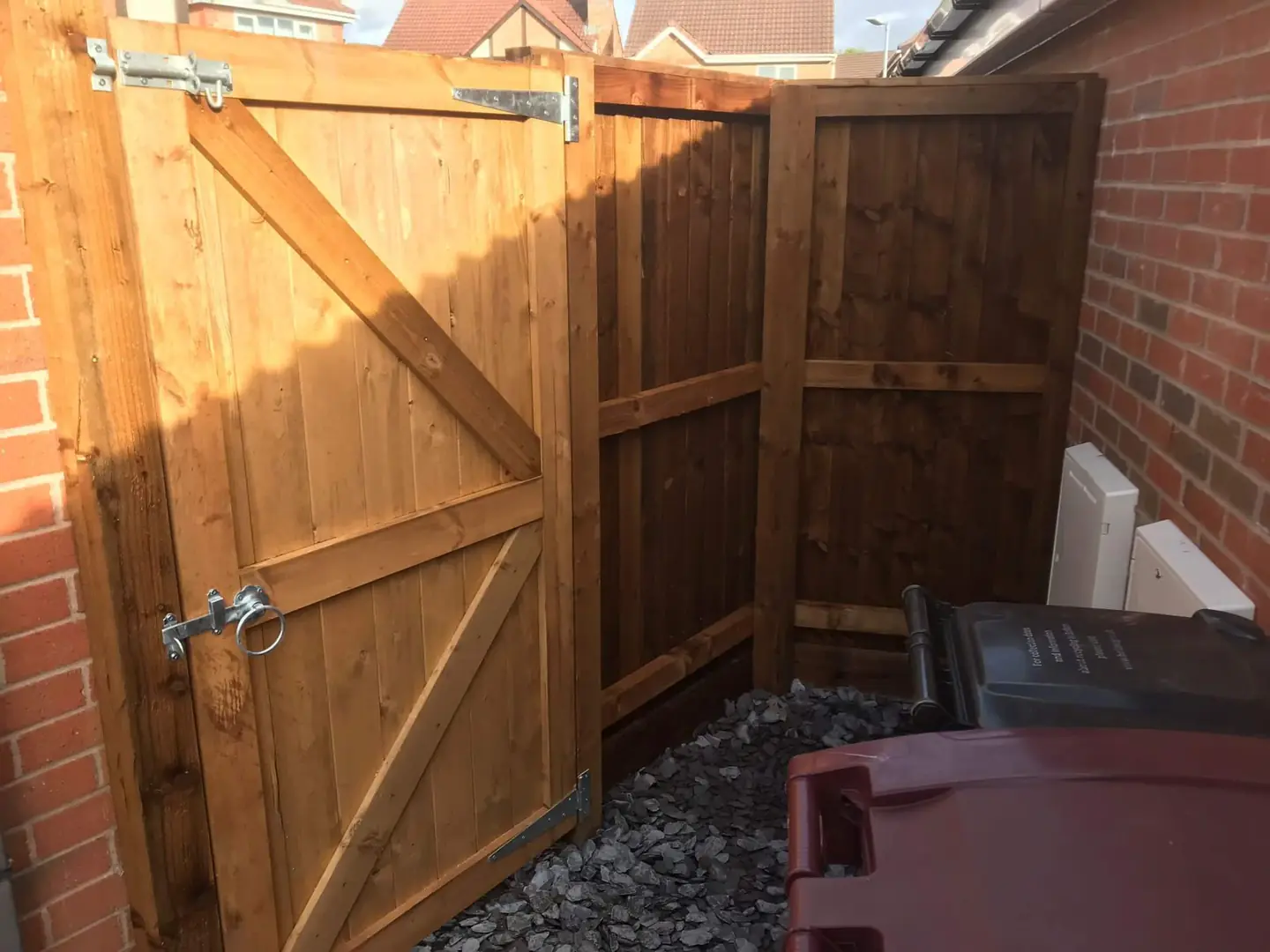
Framed, ledged and braced construction
New posts and support framing where needed
Galvanised hinges, latches and bolts
Matching infill fencing around unusual openings
Why it works
A Gate Built Around the Opening
Gate problems often start with weak support rather than the gate itself. We check the wall, post and clearance before deciding how it should be hung. Allowing for drainage and natural timber movement helps the gate keep working through wet Wigan winters.
Practical guidance
Wooden Garden Gates Supplied and Fitted
A garden gate needs to cope with repeated opening, changing weather and the weight of its own timber. We measure the actual opening, check the supporting wall or post and discuss who needs to use the gate. Bin access, pushchairs, garden equipment and mobility requirements can all affect the useful width and the position of latches or bolts.
Made-to-measure construction is helpful because side passages rarely remain perfectly square. A gate can be framed to suit the available width while leaving reasonable seasonal clearance. We use exterior timber and suitable galvanised ironmongery, then test the swing and closing point before completion. Where support is weak, new posts or framing can be included in the quotation.
Practical guidance
Side Gates, Garden Gates and Matching Fence Gates
A solid side gate provides privacy and controls access between the front and rear of a property. Lower garden gates can divide areas within a plot without blocking views. Gates installed within a new fence can use the same board direction and treatment, giving the boundary a consistent appearance. The design should still be based on use rather than appearance alone.
Wide openings place more leverage on hinges and posts. Sometimes a narrower gate with a fixed infill panel is more reliable than making the whole space move. For very broad access, a pair of gates may be worth discussing, although the ground and locking arrangement need careful planning. We explain what is practical for a domestic timber gate before confirming a design.
Practical guidance
Gate Posts, Hinges and Latches
The hinge post carries the moving weight of the gate, so sound support is essential. Fixing directly to suitable masonry may work in some openings, while others need a dedicated timber or concrete post. We consider nearby drains, paving and wall condition before choosing the fixing method. Posts are aligned so the gate can swing without twisting its frame.
Heavy galvanised T-hinges spread load across the gate. Latches, ring handles, bolts and lockable options can be selected according to access and security needs. We avoid placing fittings where they are awkward to reach or likely to strike a wall. Customers should remember that a gate used as an emergency exit or shared access may have additional practical requirements.
Practical guidance
Replacing Damaged or Rotten Gates
A gate that sticks is not always beyond repair. Loose hinge screws, minor frame movement or a latch that has shifted may be adjustable. Rotten lower rails, extensive splitting or a support post moving in the ground can make replacement more reliable. We inspect the whole opening so a new gate is not hung from the same failing support.
Timber commonly absorbs moisture during wet periods and releases it as conditions dry. Small changes are expected, but a well-braced gate should remain usable. When replacement is recommended, the old gate can be removed where included and the new one sized to current conditions. This is also an opportunity to improve the closing direction, latch height or privacy around the edges.
Practical guidance
Choosing a Gate to Match Your Garden Fence
Matching does not have to mean using exactly the same construction. A gate needs a rigid frame and diagonal bracing that a fixed panel does not. The visible boarding can still align with closeboard or feather edge fencing, and heights can be coordinated to maintain privacy. New timber will usually look brighter than an older fence until weathering reduces the difference.
When a gate is part of a full fence installation, we plan its opening before setting nearby posts. This keeps panel bays balanced and avoids a very narrow closing piece. If only the gate is being replaced, we work with the sound parts of the existing boundary. Related fence installation and garden fencing pages can help you compare complete boundary options.
Materials & options
Choose a system that suits the boundary
Closeboard timber gates for privacy
Palisade-style gates for lighter front boundaries
Pressure-treated softwood frames and boards
Heavy galvanised hinges and secure latches
Concrete or timber support posts to suit the opening
A little preparation helps the quotation reflect the real boundary and reduces avoidable decisions on installation day.
Confirm the boundary and permissions
The property owner should confirm the legal boundary, responsibility for the existing fence and any permission needed from neighbours, landlords or managing agents. We fit to the line identified by the customer and do not settle ownership disputes. If the proposed height or position is beside a highway, local planning rules may need checking before materials are ordered.
Explain access and hidden constraints
Tell us whether panels and posts can reach the garden through a drive, side passage, rear alley or the house. Steps, finished floors and narrow turns matter when handling concrete products. Point out known drains, cables, pipes, lighting supplies, irrigation or other services near the fence line. We also need to know about tree roots, walls, sheds and ground that has been recently filled.
Agree the complete specification
The quotation should identify panel or board style, post type, gravel boards, finished height, gate requirements, old-fence removal and waste disposal where included. New treated timber varies naturally in colour and usually changes as it weathers. If you plan to paint or stain it, follow the product guidance and allow appropriate drying time rather than coating wet treatment immediately.
After the work, keep soil, compost and wet leaves from building up against timber. Check hinges and latches periodically, avoid hanging heavy objects from panels and deal with movement before it damages adjoining bays. For project-specific advice, contact Wigan Garden Fencing with your postcode and photographs. Customers can also browse real fencing project images before choosing a finish.
Practical Wigan guidance
Plan the Work with Confidence
Use these decision guides before requesting a fencing quotation in Wigan.
Yes. Garden openings are rarely standard, so gates can be built to the measured space.
Can you add a lock?
We can fit practical gate latches, bolts and lockable options depending on the security and access required.
Why has my wooden gate started sticking?
Timber can swell, but sticking may also be caused by a dropped hinge or moving support post. We check the cause before adjusting it.
Can the gate match new fencing?
Yes. Board direction, height and timber style can be coordinated with a new fence installation.
Can you replace the gate posts as well?
Yes. If support is weak or badly positioned, new timber or concrete posts and suitable framing can be included in the quotation.
Which way should a garden gate open?
That depends on space, access, slopes and how the route is used. We discuss the practical swing direction before hinges and latch positions are agreed.
Do you fit lockable gate hardware?
Lockable latches and bolts can be discussed for suitable gates. The required access and who needs to operate the gate should be considered first.
Free quotation
Ready to Get Your Wigan Fence Sorted?
Tell us the approximate length, your Wigan-area postcode and what is currently there. Photographs are helpful too.