
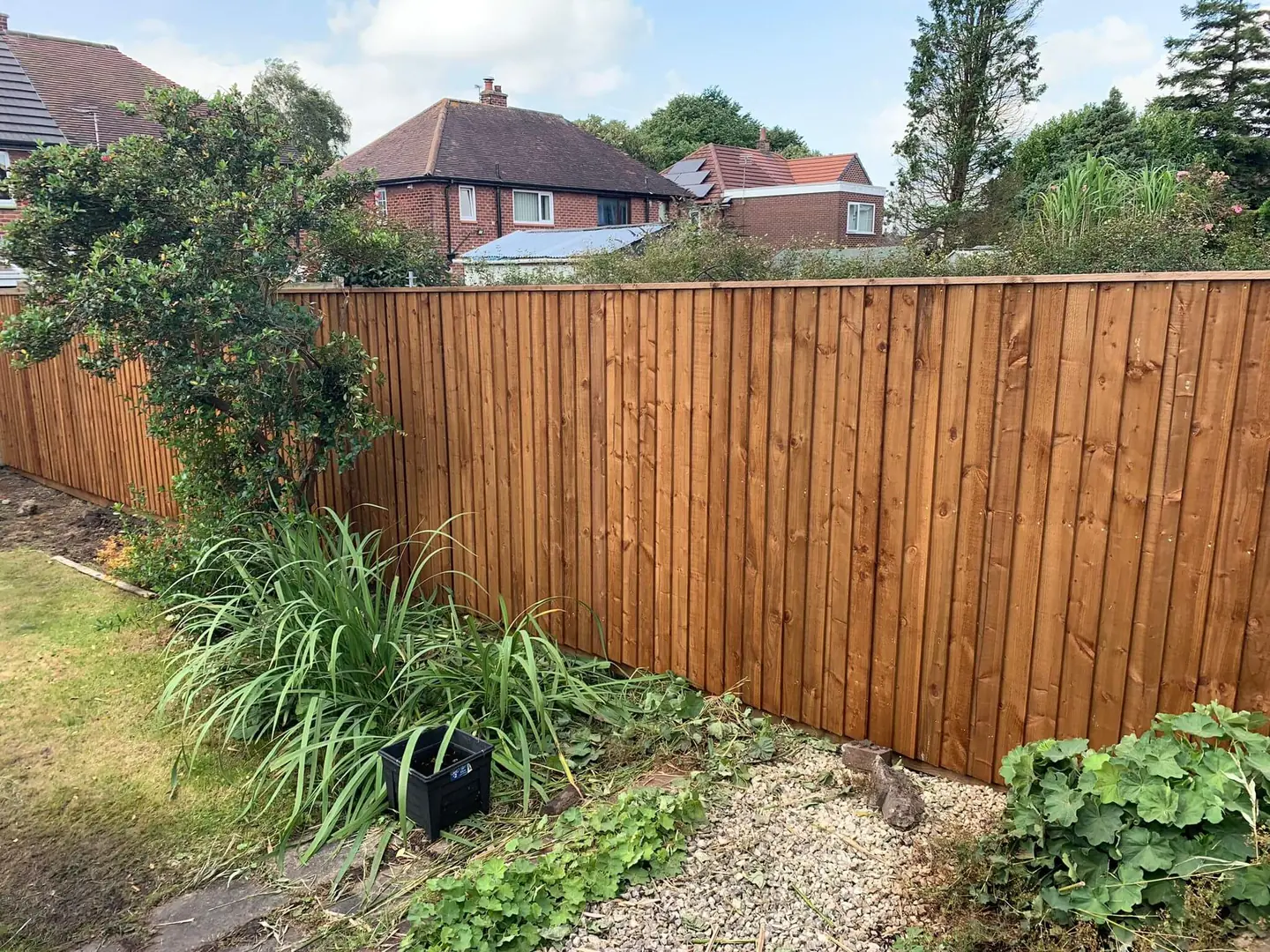
Begin with what the fence needs to do
List priorities in order: privacy from neighbouring windows, pet security, screening a service area, marking a front boundary or replacing panels between existing posts. A solid rear fence serves a different purpose from a lower front-garden boundary.
Consider where screening is actually needed. A lower section or trellis top may retain light near a patio, while a solid panel may suit the part beside a path. Height and position can be subject to planning requirements, so check with the relevant local planning authority if the boundary is beside a highway or the proposal is unusual.
Closeboard and feather-edge fencing
Feather-edge boards overlap vertically and are fixed to horizontal rails. They can form panels or be built along the boundary. Board-built fencing is useful for non-standard lengths and slopes because the finished line is less dependent on standard panel sizes.
Closeboard provides solid screening and a substantial appearance. Its weight means the post system and foundations need to suit the height and exposure. It works well for many Wigan rear and side gardens where privacy is the main aim.
Waney lap and decorative panels
Waney lap panels use overlapping horizontal boards. They are a familiar, economical option for sheltered domestic gardens and are widely available in standard sizes. Check the frame, board thickness and supports rather than comparing style names alone.
Decorative panels can soften a patio boundary or allow light through the upper section. Slatted designs give filtered screening rather than complete privacy. Trellis can support suitable planting, but added plant weight and wind resistance need attention as growth matures.
Panels on slopes and awkward final bays
Standard rectangular panels are generally stepped on sloping ground. Agree the top line and any lower gaps before work starts. Small animals, drainage and the view from both gardens can influence how steps are arranged.
Individual boards can follow a slope more closely and avoid a very narrow cut panel at the end. Corners, walls and sheds may still require measured infill. Send photographs that show the whole change in level rather than one bay.
Match panels with posts and gravel boards
Concrete or timber gravel boards keep the lower panel edge away from soil and wet leaves. Slotted concrete posts make compatible panels removable, while timber posts provide a continuous natural appearance. Panel, post and gravel board form one system and should not be selected independently.
If existing posts are staying, measure the opening at several heights because older Wigan fence bays may not be square. Our post comparison explains the support choices. Compare quotations by panel style, finished height, post and gravel-board type, treatment of corners, gate work and removal of old materials. Examples are available on the recent Wigan fencing work page.