
The practical difference between both systems
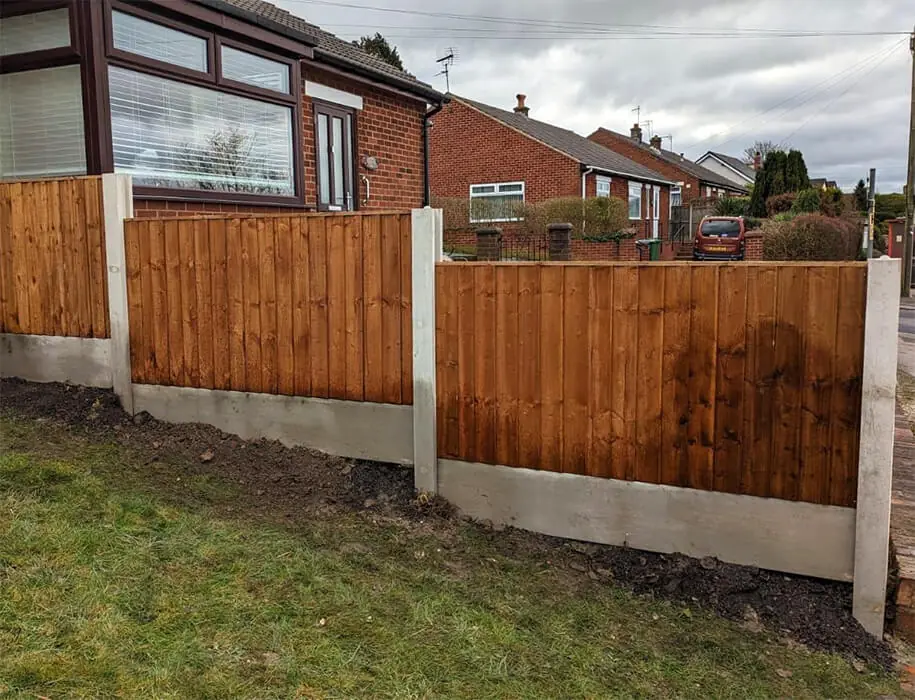
Slotted concrete posts commonly hold removable timber panels above a concrete or timber gravel board. They resist decay where the support meets wet ground and can make later panel replacement straightforward. Their weight, visible finish and handling requirements still need consideration.
Timber posts create a continuous all-wood appearance and are easier to carry through narrow side access. They can support panels or rails for board-built fencing. Treated timber is intended for outdoor use, but any timber near damp ground benefits from drainage and sensible care.
Where concrete posts can be useful
Concrete posts suit customers who prioritise ground-contact durability and replaceable panels. They are often considered when older timber posts have repeatedly rotted at soil or paving level. Gravel boards can lift the panel clear of wet soil and garden debris.
They are heavy. Steps, tight turns and access through a Wigan terraced home can affect whether they can be handled safely. Existing foundations and known underground services also influence post positions. Read more about concrete fence posts in Wigan.
Where timber posts can be the better fit
Timber posts work well when the customer wants less contrast between supports and boards, or where materials must pass through restricted access. They also suit fencing built from rails and individual feather-edge boards rather than removable panels.
A timber system still needs properly sized posts, suitable treatment and firm foundations. Keeping soil, compost and wet leaves away from the base helps reduce persistent moisture. A timber gravel board can protect the panel edge while preserving the all-wood appearance.
Appearance, maintenance and future repairs
Concrete introduces a pale vertical line between timber panels. Some Wigan customers like that ordered finish; others prefer timber continuity. Consider what will be seen from the main seating area and how the fence meets brick walls, paving and a gate.
A compatible panel can often slide out of sound concrete posts for later replacement. Timber-panel systems can also be repaired, although fixings and rails may require more dismantling. Neither option prevents storm damage: foundation, post spacing, panel weight, height and exposure work together.
Access, slopes and a decision checklist
Long concrete products need a clear carrying route. Tell the installer about steps, narrow passages, finished floors, low roofs and rear alleys. On slopes, standard panels may need stepping, while board-built timber fencing can follow the ground more closely.
- Choose the appearance you want from the garden.
- Check whether concrete products can reach the boundary.
- Consider damp soil and wet leaves at the fence base.
- Decide whether easy panel changes are a priority.
- Account for slopes, roots and old foundations.
- Compare quotations using the same panel and removal scope.
See Wigan garden fencing options or use the contact page for advice about your boundary.