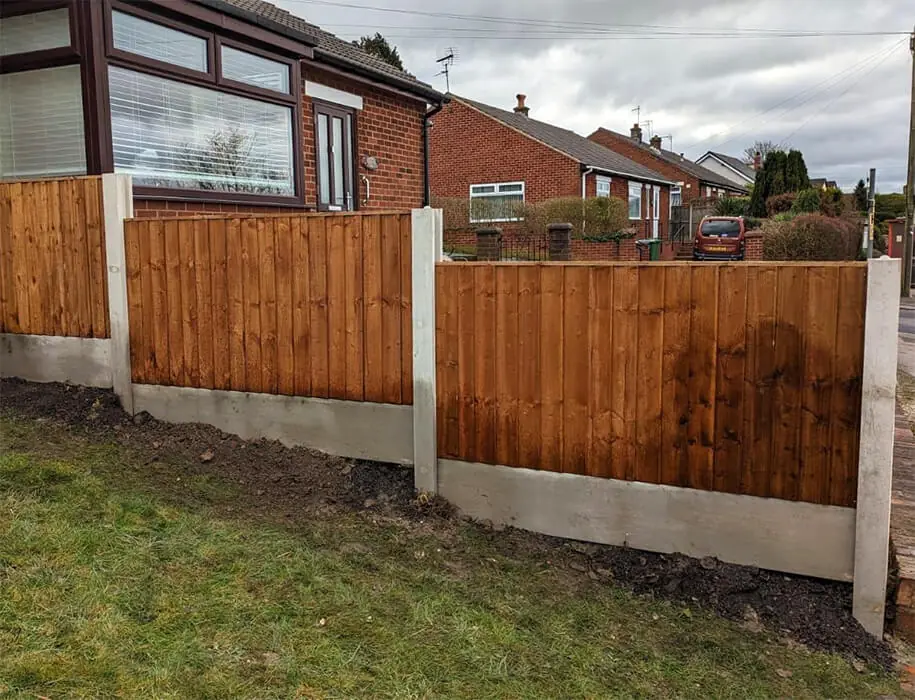
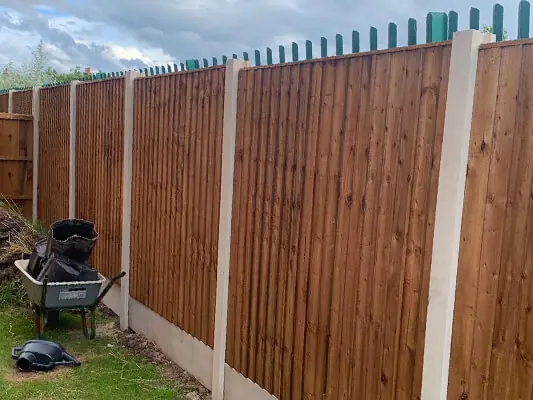
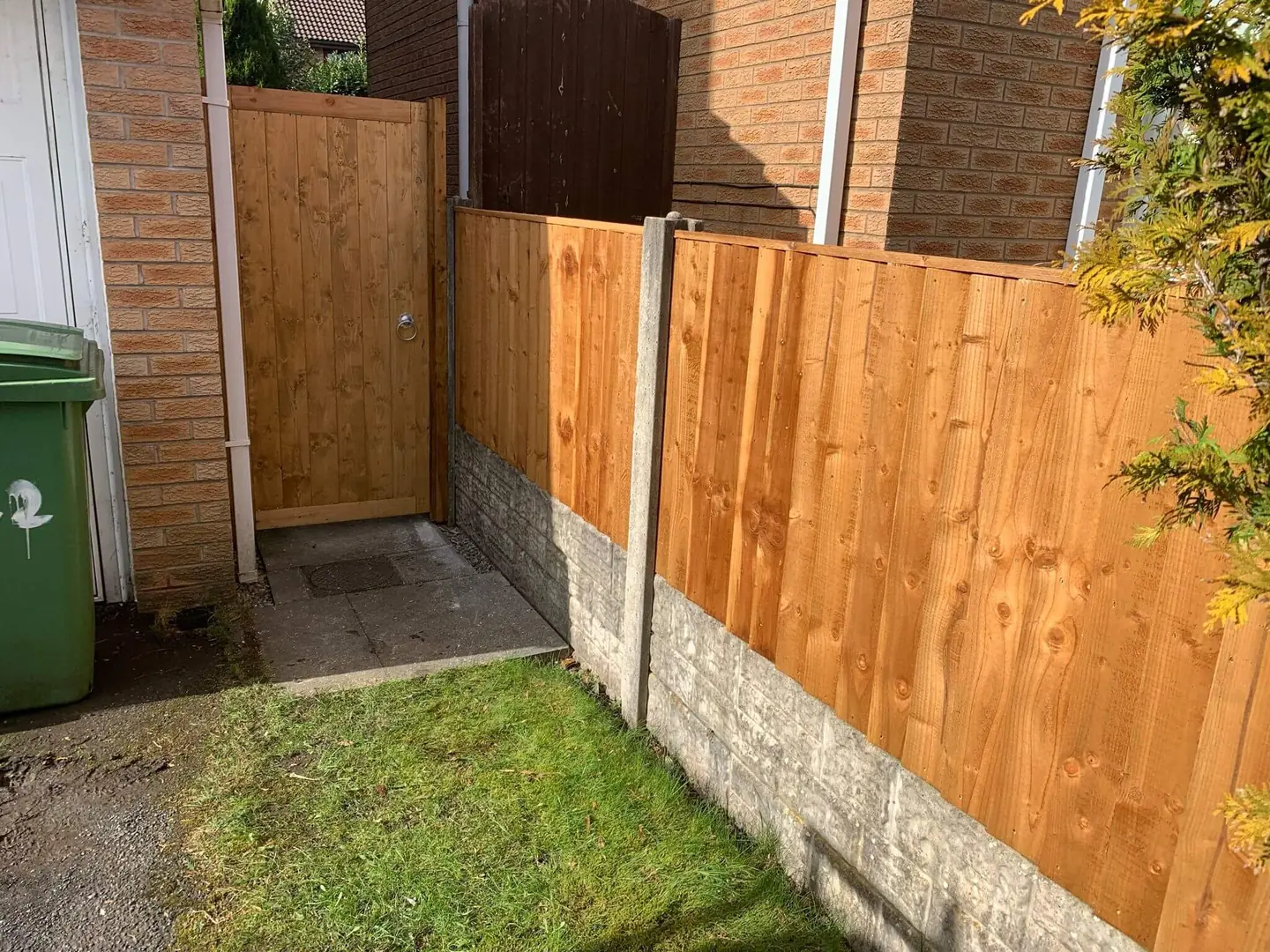
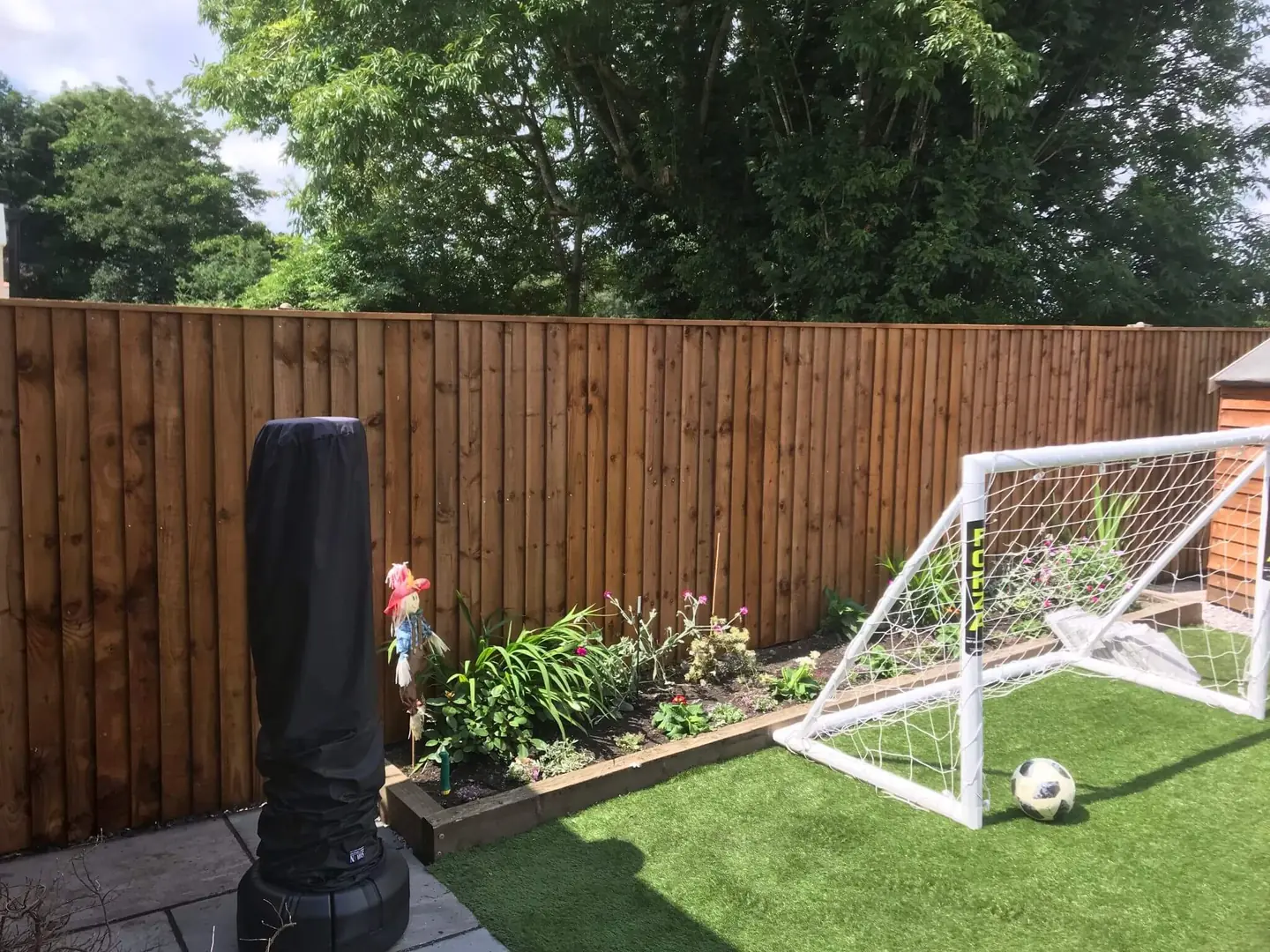
Concrete posts are a practical choice where long-term ground contact and easy panel replacement matter. We install concrete post and gravel-board systems for new fencing and targeted repairs throughout Wigan.
Local Wigan fencing teamClear written quotationsRepairs and installationPanels posts and gates
Included
What this service can cover
Slotted concrete posts for standard panels
Concrete gravel boards at ground level
Replacement of cracked or leaning posts
Conversion from failed timber supports
Corner and end-post planning
Panel fitting and made-to-fit closing sections
Why it works
Concrete Support Where It Makes Practical Sense
A concrete system is only as reliable as its foundations and alignment. Post depth, hole size, ground conditions and panel spacing all need to work together. We set the run carefully so panels can be changed later without dismantling neighbouring sections.
Practical guidance
Concrete Fence Posts and Gravel Boards
Concrete posts form a rot-resistant framework for panel fencing. Slotted intermediate posts hold a panel on each side, while end and corner posts finish or change the direction of the run. Concrete gravel boards sit between the posts at ground level and support the panels above. The result is a system where a damaged standard panel can often be lifted out without replacing the supports.
Posts and boards are heavy, so access and safe handling need to be planned. Narrow paths, steps and routes through a house can affect what is practical. We measure bay widths and ground levels before ordering materials, because small errors can leave panels loose or impossible to fit. Foundations are sized for the post, soil and expected fence height.
Practical guidance
Why Choose Concrete Posts?
The main advantage of concrete is resistance to decay at the point where the post enters the ground. This can be helpful in damp borders or where customers want to change panels in future without disturbing foundations. Concrete posts also provide a consistent slot for standard panels. They do not make a fence immune to damage; poor alignment, shallow foundations or severe impact can still cause movement or cracking.
Some customers prefer timber because concrete is more visible and heavier to install. Others value the long-term support and straightforward panel replacement. We explain both options and can sometimes combine concrete supports with decorative timber panels. The correct spacing and compatible panel dimensions are confirmed before the quotation is finalised.
Practical guidance
Replacing Rotten Timber Posts
Rotten timber posts often fail near ground level, leaving the upper section attached to otherwise usable panels. A concrete repair spur can support some posts when the timber above is sound, but it is not a universal fix. Where rot extends into rails or the post is badly split, removing it and installing a new support is usually more dependable.
Changing from timber to slotted concrete posts may require alterations to panels or spacing. It is not always possible to replace posts one by one without disturbing adjoining bays. We assess whether a local repair can align with the existing run and whether old concrete can be removed safely. The quotation then distinguishes retained materials from new work.
Practical guidance
Concrete Posts for Storm-Damaged Fencing
After a storm, the broken panel is often the most visible problem, but the force may also have loosened foundations or cracked posts. Concrete posts should be checked for movement at ground level and damage around the slots. A panel fitted into unstable posts is likely to work loose again. We inspect neighbouring bays and explain whether isolated replacement remains sensible.
For exposed boundaries, post depth, panel weight and wind pressure all need consideration. A solid heavy panel is not automatically the strongest answer if the support system and site exposure are ignored. We can discuss closeboard panels, feather edge construction and alternative arrangements according to the property. No fence can be promised to resist every storm, but sound installation reduces avoidable weak points.
Practical guidance
Why Gravel Boards Help Protect Your Fence
Gravel boards create a sacrificial or durable barrier between timber panels and the ground. Concrete boards resist rot and can retain small differences in soil level when installed appropriately. Timber boards provide a consistent natural finish and are easier to cut for certain details. Neither should be used as a retaining wall for significant ground pressure without proper design.
Lifting panels above soil reduces persistent moisture contact and protects the lower boards from strimmers, compost and wet leaves. It also makes future panel replacement cleaner. Ground levels should not be built up against timber after installation. If beds are being redesigned, tell us during the quotation so finished board heights can be discussed.
A little preparation helps the quotation reflect the real boundary and reduces avoidable decisions on installation day.
Confirm the boundary and permissions
The property owner should confirm the legal boundary, responsibility for the existing fence and any permission needed from neighbours, landlords or managing agents. We fit to the line identified by the customer and do not settle ownership disputes. If the proposed height or position is beside a highway, local planning rules may need checking before materials are ordered.
Explain access and hidden constraints
Tell us whether panels and posts can reach the garden through a drive, side passage, rear alley or the house. Steps, finished floors and narrow turns matter when handling concrete products. Point out known drains, cables, pipes, lighting supplies, irrigation or other services near the fence line. We also need to know about tree roots, walls, sheds and ground that has been recently filled.
Agree the complete specification
The quotation should identify panel or board style, post type, gravel boards, finished height, gate requirements, old-fence removal and waste disposal where included. New treated timber varies naturally in colour and usually changes as it weathers. If you plan to paint or stain it, follow the product guidance and allow appropriate drying time rather than coating wet treatment immediately.
After the work, keep soil, compost and wet leaves from building up against timber. Check hinges and latches periodically, avoid hanging heavy objects from panels and deal with movement before it damages adjoining bays. For project-specific advice, contact Wigan Garden Fencing with your postcode and photographs. Customers can also browse real fencing project images before choosing a finish.
Practical Wigan guidance
Plan the Work with Confidence
Use these decision guides before requesting a fencing quotation in Wigan.
They resist rot at ground level and make future panel changes simpler. Timber posts provide a softer all-wood appearance, so the right choice depends on priorities.
Can you replace one concrete post?
Often, yes. Access and the condition of adjoining panels determine whether a localised replacement is practical.
Do concrete gravel boards help timber panels last?
They lift the bottom of the panel away from wet soil, reducing direct moisture contact and accidental strimmer damage.
Can decorative panels go in concrete posts?
Many standard-width panels can, provided the dimensions and post spacing are suitable. We check compatibility before installation.
Can timber posts be changed to concrete posts?
Often, but existing spacing and panel dimensions must be checked. Conversion may require several bays to be reset rather than swapping one post at a time.
Do cracked concrete posts always need replacement?
Minor surface marks are different from structural cracks or movement. We inspect the post, slot and foundation before recommending replacement.
Can gravel boards retain soil?
They can handle small level differences when installed appropriately, but ordinary fence gravel boards are not a substitute for a designed retaining wall.
Free quotation
Ready to Get Your Wigan Fence Sorted?
Tell us the approximate length, your Wigan-area postcode and what is currently there. Photographs are helpful too.