
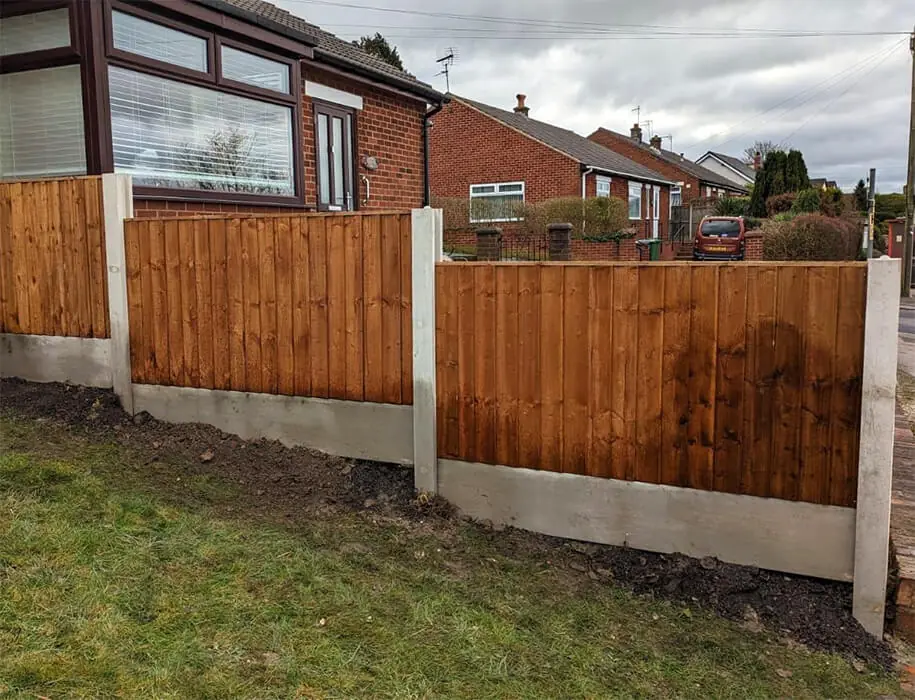
What affects the cost of fencing in Wigan?
A quotation begins with the existing boundary and the outcome required. The length and finished height establish the quantity of materials, while panel style, post type, gravel boards, gate work and corners affect the construction. A straight run on clear ground is different from a boundary interrupted by walls, trees, sheds and several changes in level.
Labour is also shaped by what must be removed. Old post foundations can be larger than expected, and several generations of repairs may leave concrete, timber and metal below the visible line. Access, parking, carrying distance and protection through the property all form part of planning the work. For that reason, a genuine quotation should describe the complete scope rather than rely on a price per panel alone.
Fence panel replacement costs
Replacing one or two panels can be the most economical answer when the posts remain upright, correctly spaced and secure. The opening must be measured because older bays are not always standard. A cut panel or measured timber infill may be needed if posts have moved or previous repairs changed the spacing.
The visible broken panel is not always the only cost factor. A cracked gravel board, damaged retaining clip or loose support can need attention before the new panel is fitted. New treated timber will usually look lighter than the surrounding fence. Our Wigan fence repair service explains how panels and neighbouring bays are assessed together.
Full fence replacement factors
A full replacement quotation accounts for setting out the line, removing old materials, excavating foundations, installing posts and fitting panels or individual boards. Corners, end sections and gates require extra planning because they interrupt standard bay spacing. Long boundaries magnify small alignment errors, so accurate measurement matters from the first post.
The cheapest visible panel does not necessarily create the lowest complete project cost. A heavier privacy panel needs dependable support, while board-built feather-edge fencing may be more practical on slopes and unusual lengths. Compare quotations using the same height, post material, gravel boards, removal scope and gate requirements. The fence installation page describes the full process.
Concrete posts and gravel boards
Concrete posts and gravel boards add heavy materials and handling, but they resist timber decay at ground level and can make compatible panel replacement simpler later. The quotation needs to consider post length, foundations, bay spacing and whether the carrying route can accommodate long concrete products safely.
Concrete gravel boards lift timber panels above soil, compost and wet leaves. They are not intended to retain substantial changes in ground level without suitable design. Where sound concrete posts already exist, retaining them may reduce unnecessary work, provided the spacing and alignment suit the new panels. Read the concrete fence post guide for the practical trade-offs.
Fence repair cost factors
Repair cost depends on the cause of failure and the amount of surrounding work needed to leave the section usable. Rehanging a sound gate is a smaller task than replacing its moving hinge post. A single rotten timber post may be repairable with a suitable spur, while widespread decay through posts and rails can make local patching poor value.
Storm damage also needs checking beyond the missing panel. Wind can loosen foundations or crack a post without making the problem immediately obvious. Photographs help identify the likely work, but movement at ground level may require a visit. A clear repair quotation should state which panels, posts, boards, fittings and waste are included.
Access through the house, side paths and rear alleys
Materials and waste need a safe route between the road and the fence. A driveway and broad side gate make handling different from a terraced property where everything passes through the house. Narrow turns, steps, low roofs and finished floors can limit panel size or make heavy concrete products less practical.
Rear alley access can help, but permission, parking and usable width should be confirmed rather than assumed. Tell the fencing company where vehicles can stop and how far materials must be carried. Photographs of the complete route are useful because access that looks generous at the front can narrow beside an extension or outbuilding.
Removing old fencing and waste
Removal should be discussed before quotations are compared. Timber panels, posts, concrete gravel boards and old foundations differ in weight and disposal requirements. Some customers want the whole boundary cleared, while others have agreed to retain sound posts or a short connecting section.
The written scope should say whether old fencing, excavated concrete and installation offcuts will be removed. It should also identify any customer items that need moving before work starts. Separating this information prevents a low headline figure from becoming a different job once the condition of the old boundary is considered.
Sloped gardens and awkward boundaries
Standard panels are normally stepped on sloping ground, which affects post lengths, gravel-board levels and gaps below the fence. Feather-edge boards can follow a changing level more closely, but they require rails, individual boards and careful setting out. Agreeing the top line before installation prevents an improvised appearance.
Tree roots, old walls, drains and paving may restrict the preferred post position. End bays beside sheds or brickwork often need measured infill rather than a full panel. These details influence both materials and time, so wide photographs and a site visit are more valuable than estimating from boundary length alone.
Why photos help with quoting
Start with wide photographs taken along the complete line, then add close views of failed posts, panel edges, gravel boards, gates and corners. Include the route from the road and any steps or narrow passages. Photos help distinguish one damaged component from a support problem across several bays.
Add the postcode, approximate length, preferred height and a short description of what you want the fence to achieve. Measurements do not need to be perfect for the first conversation, but they help decide whether a visit is required. Avoid leaning on unstable fencing or entering neighbouring property without permission simply to obtain a picture.
When repair may be better than replacement
Repair is often better value when the failure is isolated and the retained boundary can support the new work. One compatible panel between firm posts, a failed latch or a single post can be a sensible focused job. The new material may initially differ in colour, but that alone does not justify replacing sound fencing.
Replacement becomes more reasonable when several posts move, rot extends through rails and boards, or repeated repairs have created irregular bays. The decision should compare the useful scope rather than assume the larger job is always better. Send photographs through the Wigan fencing enquiry form or call 01942 410230 for the next practical step.